
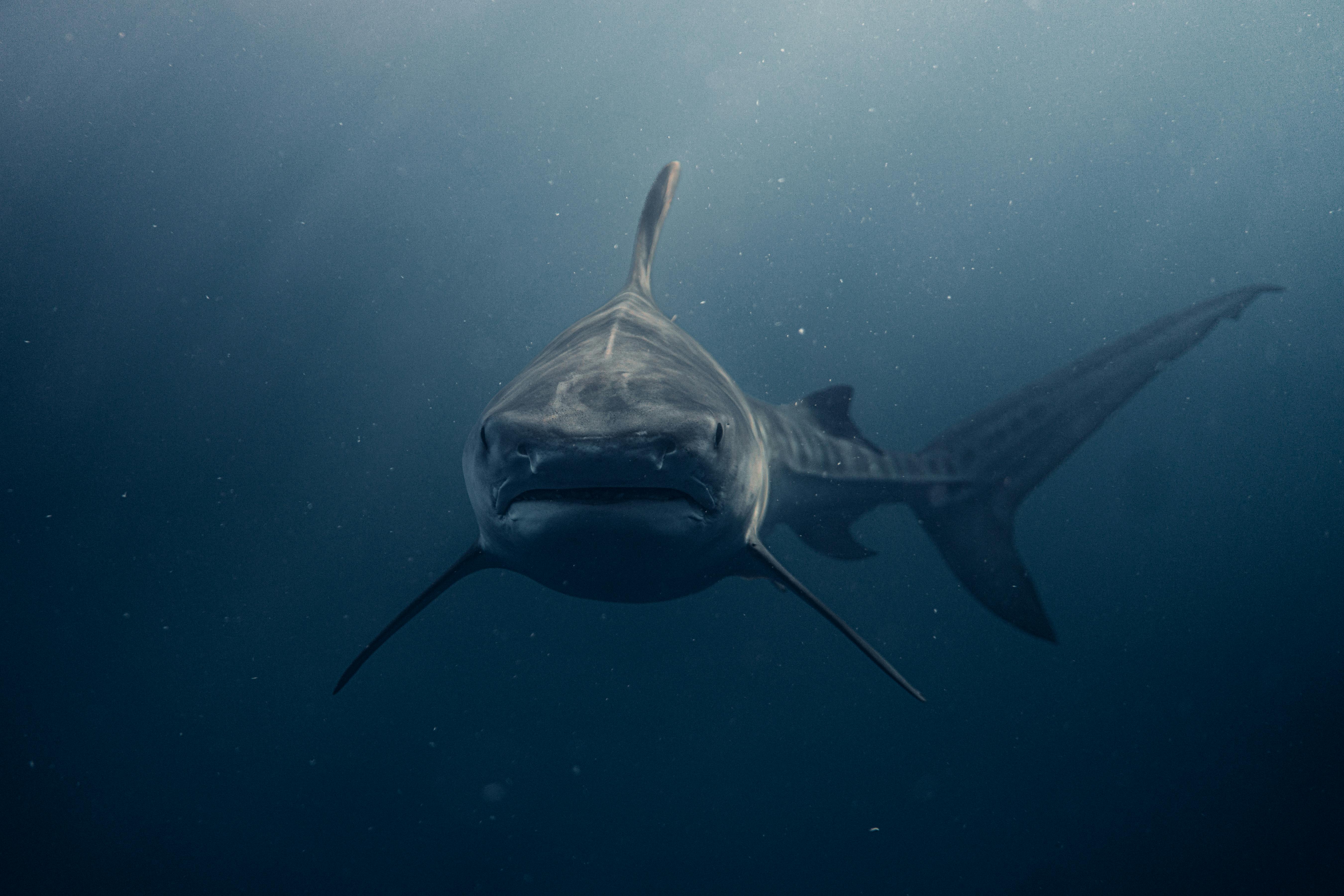
What This Bill Does
The Florida Safe Seas Act of 2025 would amend the Magnuson-Stevens Fishery Conservation and Management Act to prohibit feeding sharks in the exclusive economic zone off Florida. It does this by changing section 317 of the law, which already covers shark-feeding restrictions, to add Florida alongside Hawaii. The bill does not create a new grant program or set a dollar amount; it changes federal fisheries law to make the ban apply in Florida waters within the U.S. exclusive economic zone.
- Adds Florida to section 317 of the Magnuson-Stevens Fishery Conservation and Management Act.
- Targets the exclusive economic zone off the State of Florida.
- Uses an existing federal shark-feeding prohibition rather than creating a new program.
- No funding amount, grant, or tax change is included in the bill.
Who This Bill Affects
For the general public, this bill would mainly matter to people who fish, dive, boat, or otherwise interact with sharks in federal waters off Florida. If enacted, it would make feeding sharks in the exclusive economic zone off Florida unlawful under federal law, but it would not impose a fee, create a benefit, or change taxes. The practical effect is a behavior restriction aimed at reducing shark-human interactions in that specific area.
See how this bill affects you — sign in for a personalized analysisWho Supports & Opposes This
- Coastal residents and beachgoers They may support the bill as a safety measure that discourages sharks from associating people and boats with food. That could reduce the chance of risky encounters in popular swimming, diving, and boating areas.
- Marine safety and fisheries regulators They may favor a clear federal rule that is easy to enforce in the exclusive economic zone off Florida. Adding Florida to the existing statutory language could simplify compliance and enforcement compared with a patchwork of local practices.
- Tourism-dependent coastal businesses Businesses that rely on a reputation for safe beaches may see value in reducing high-profile shark incidents. Even if the bill is narrow, it could help reassure visitors and protect coastal recreation economies.
- Recreational anglers and charter operators They may argue the ban limits common fishing-related practices and could interfere with educational or tourism activities involving sharks. Some may see the rule as unnecessary if existing safety practices already address the risk.
- Wildlife tour operators Operators who use controlled shark interactions for tours or research-adjacent experiences may worry about reduced flexibility in federal waters. They may argue that a blanket prohibition is less nuanced than site-specific management.
- Local businesses that market shark-related experiences Some businesses may object because the bill could restrict paid activities that involve attracting sharks. They may contend that the economic impact, while localized, could fall on legitimate coastal recreation services.
Key Implications
-
““prohibit feeding sharks in the exclusive economic zone off the State of Florida””
This is the core policy change: feeding sharks in federal waters off Florida would be barred under federal law. The restriction applies to conduct in the exclusive economic zone, not just on beaches or in state waters.
-
““Section 317 ... is amended””
The bill does not create a new standalone regime; it changes an existing federal fisheries provision. That means enforcement would likely fit into the current Magnuson-Stevens framework rather than a separate Florida-only statute.
-
““by inserting ‘and Florida’ after ‘Hawaii’””
Florida would be added to a list already containing Hawaii, showing that Congress is extending an existing shark-feeding prohibition to another state-specific coastal area. The practical result is a broader federal ban in one more region.
-
““the States””
Changing “the State” to “the States” signals that the underlying section is being broadened in wording as part of the amendment. For ordinary people, the important point is that the law’s geographic coverage is being expanded, not replaced.
Latest Status
May 20, 2026
Placed on the Union Calendar, Calendar No. 572.
Will It Pass?
14% estimated chance of becoming law
H.R. 3831 was introduced in the House on June 6, 2025, referred to the Committee on Natural Resources, and later placed on the Union Calendar and ordered to be printed as Report No. 119-658 on May 20, 2026. The bill has bipartisan sponsorship in the text: Mr. Webster of Florida and Mr. Soto introduced it, with additional sponsors listed as Mr. Rutherford, Mr. Haridopolos, Mr. Bilirakis, and Mr. Steube. Bills that amend fisheries and wildlife rules in a targeted way often move as narrow regulatory measures rather than major partisan fights, but their passage history depends heavily on committee action and floor scheduling.
Pass percentages are model estimates and may be inaccurate.
Take Action
Get more from BillBoard
Free tools to understand, respond to, and track this bill.
Ask AI about this billData sourced from api.congress.gov.